

Blog
How AI is Replacing Routine Work for CAs & CMAs

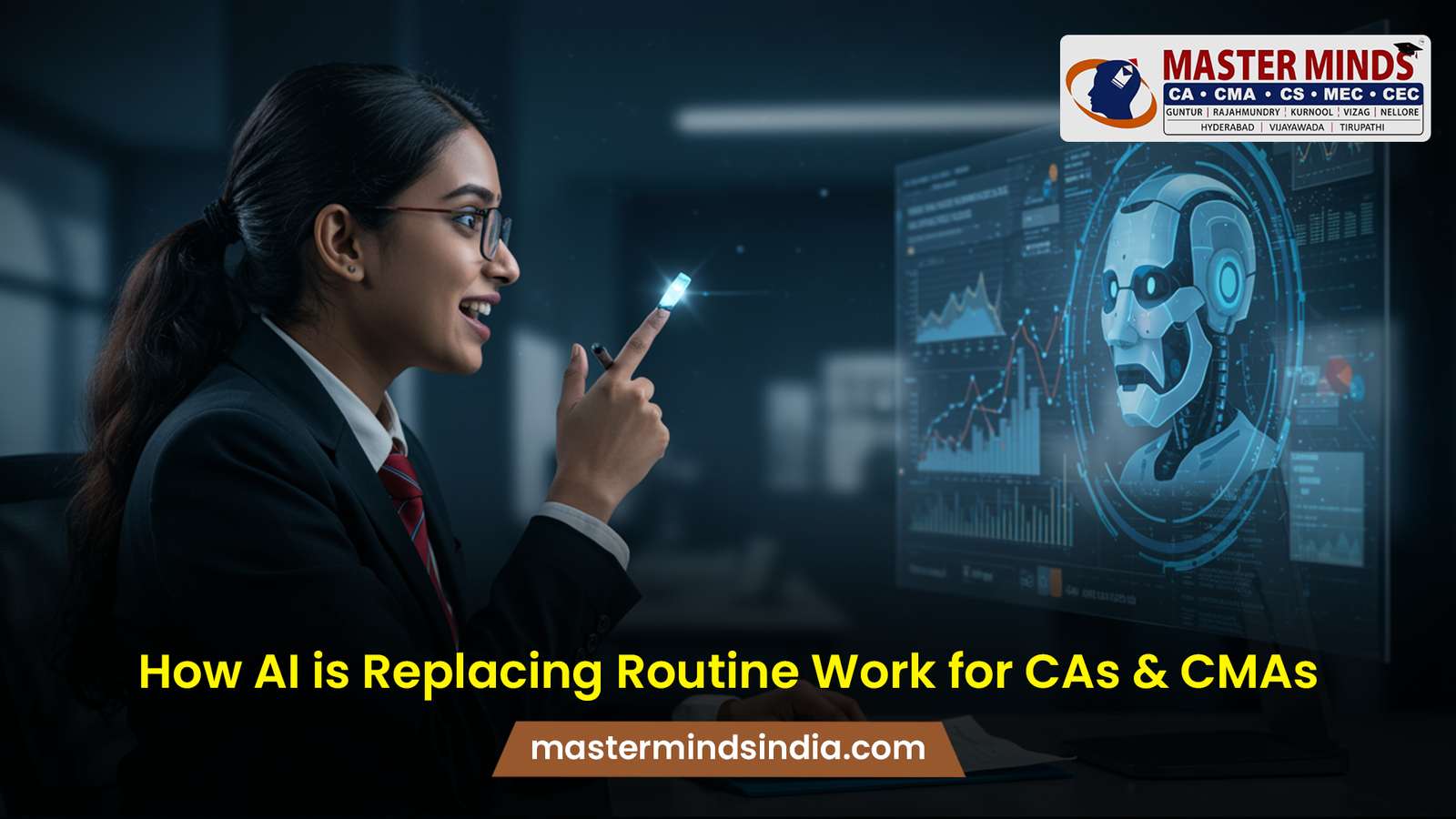
Artificial Intelligence (AI) is transforming the accounting and finance world at a speed we have never seen before. For Chartered Accountants (CAs) and Cost & Management Accountants (CMAs), AI is not just a buzzword anymore – it’s becoming an everyday reality. From automating repetitive tasks to improving decision-making, AI is reshaping how accounting professionals work.
In this article, we will explore how AI is replacing routine work for CAs and CMAs, its benefits, and what professionals should do to stay relevant in this changing environment.
Why AI is Disrupting Accounting?
Accounting has always involved a lot of data entry, reconciliations, and compliance work. These are rule-based and repetitive tasks – something AI is perfect for. AI-powered tools can analyze large data sets, detect errors, and process transactions in seconds, which would otherwise take hours or days for humans.
The biggest advantage? Accuracy and speed. AI systems don’t get tired or make silly mistakes due to fatigue. This makes them ideal for handling high-volume, routine work.
Routine Tasks AI is Automating for CAs & CMAs
Here are some common accounting tasks that AI is now taking over:
Data Entry & Bookkeeping
Manual entry of invoices, receipts, and ledger updates is becoming history. AI tools like QuickBooks, Xero, and Zoho Books use machine learning to scan and record transactions automatically. This saves hours of work for accountants.
Bank Reconciliation
Instead of manually matching transactions with bank statements, AI software can auto-reconcile accounts in real-time. It identifies mismatches instantly and flags suspicious transactions for review.
Expense Management
AI-powered apps automatically categorize expenses, verify receipts, and even suggest cost-saving opportunities. CMAs, who specialize in cost control, can leverage these insights to make strategic decisions rather than spending time on manual checks.
Tax Compliance & Filing
AI-based tax software calculates taxes, updates regulatory changes, and even prepares tax returns with minimal human input. This reduces errors and ensures compliance with the latest laws.
Audit & Fraud Detection
Auditing is another area where AI shines. By using predictive analytics and anomaly detection, AI tools can identify unusual transactions, reducing fraud risks and improving audit quality.
Benefits of AI for Accounting Professionals
While some fear that AI will replace jobs, the reality is different. AI is not replacing CAs and CMAs entirely—it is replacing routine work so that professionals can focus on high-value tasks like:
- Strategic Financial Planning
- Business Advisory Services
- Data Analysis & Forecasting
- Risk Management
This shift allows accountants to move from “number crunchers” to strategic advisors, adding more value to businesses.
Challenges & Risks of AI in Accounting
Even though AI brings efficiency, there are some challenges:
- Data Security – Handling sensitive financial data requires strong cybersecurity.
- Initial Costs – Implementing AI tools can be expensive for small firms.
- Skill Gap – Accountants need to upgrade their skills to work with AI-driven systems.
You Can Also Read:
- CA Intermediate New Study Material
- CA Course Duration After 10th, 12th & Graduation
- Tips to Crack CA in First Attempt
- Time-Saving Calculator Tricks for CA Foundation Students
- How to become a CA?
- CA Foundation New Syllabus
- CA Inter New Syllabus
- ICAI CA New Scheme
How CAs & CMAs Can Stay Relevant
To thrive in this AI-driven era, professionals must upskill and adapt. Here’s how:
- Learn AI Tools: Get familiar with platforms like SAP, Tally with AI features, and cloud accounting software.
- Focus on Analytics: Understand data interpretation and business intelligence tools.
- Enhance Soft Skills: Advisory and consulting roles need communication and problem-solving skills.
CA & CMA Online Classes: