

Blog
How to Transition from CMA to CFO Role?

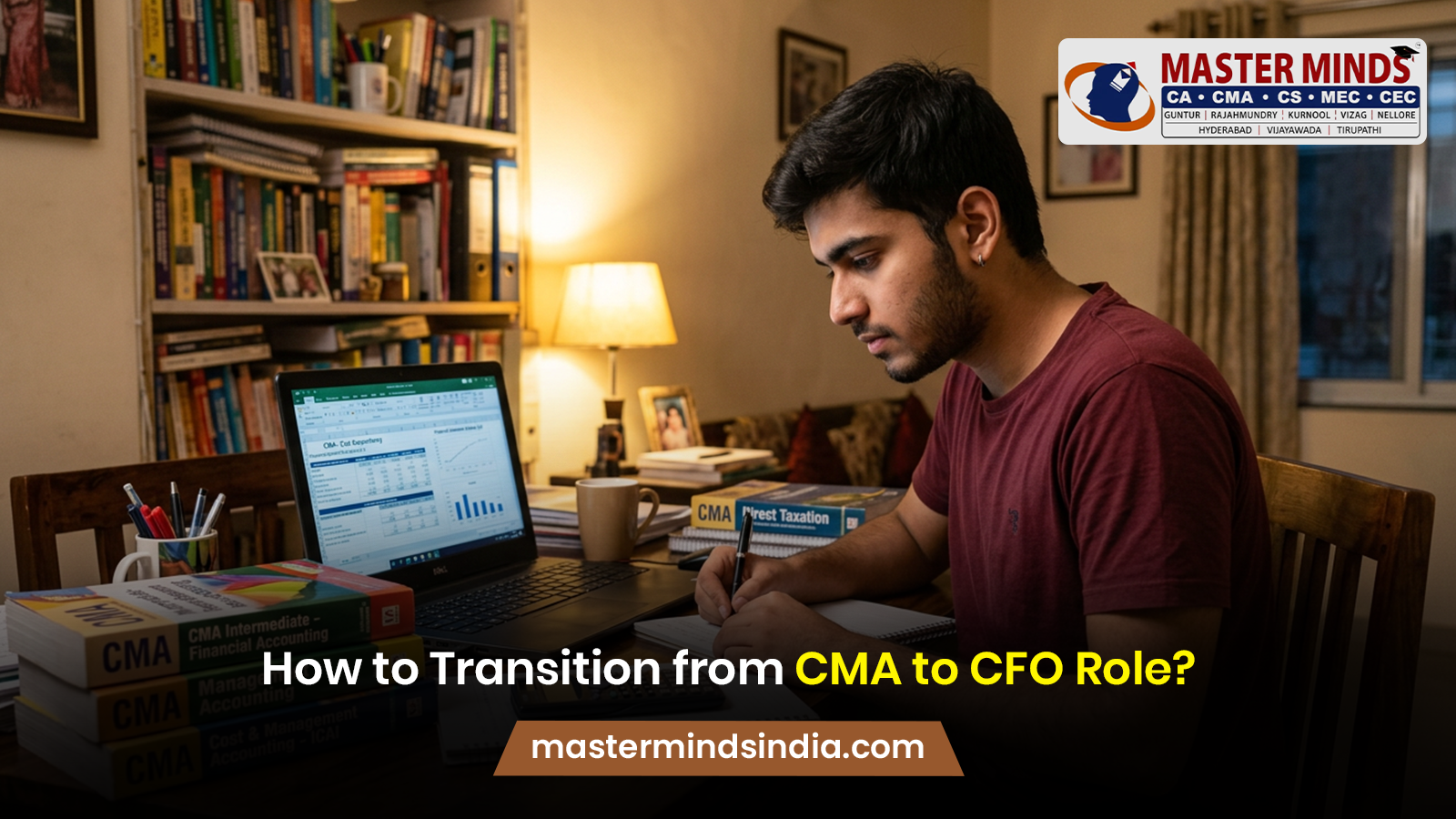
If you’re a CMA professional thinking about stepping into a leadership position, you’re already on a powerful path. Many finance leaders today started their journey exactly where you are now. The transition from CMA to CFO Role isn’t just about experience—it’s about evolving your mindset, skills, and visibility.
Let’s break it down in a simple, real-world way.
Understanding the Big Shift
As a CMA, your role is often focused on cost management, budgeting, financial reporting, and analysis. You’re strong in numbers, systems, and efficiency.
But when you aim for a CFO role, things expand.
You’re no longer just managing finances—you’re shaping business strategy, influencing decisions, managing risks, and working closely with CEOs and stakeholders. In short, you move from number crunching to decision making.
Step 1: Build Strategic Thinking
One of the biggest differences between a CMA and a CFO is strategic involvement.
To move toward a CMA to CFO Role, start asking questions like:
- Why is the company investing in this project?
- How does this financial decision impact long-term growth?
- What risks are involved?
Instead of just preparing reports, try to interpret them and suggest actions. This shift in thinking is what sets future CFOs apart.
Step 2: Strengthen Business Acumen
A CFO doesn’t just understand finance—they understand the entire business.
Spend time learning about:
- Operations
- Marketing strategies
- Supply chain
- Industry trends
For example, if you’re working in an e-commerce company, understand customer behavior, pricing models, and competition. This broader perspective helps you contribute beyond finance, which is essential in the journey from CMA to CFO Role.
Step 3: Develop Leadership Skills
Technical skills alone won’t take you to the top.
You need to lead teams, manage conflicts, and inspire people. Start by:
- Taking initiative in team projects
- Mentoring juniors
- Handling cross-functional collaborations
Even small leadership experiences matter. CFOs are not just finance experts—they are team leaders.
Step 4: Improve Communication Skills
You might be excellent with numbers, but can you explain them clearly to non-finance people?
That’s critical.
A CFO must:
- Present financial insights in simple language
- Communicate with investors and board members
- Influence decision-makers
Practice simplifying complex financial concepts. Think of it as telling a story with numbers.
Step 5: Gain Exposure to Key Financial Functions
To successfully move from CMA to CFO Role, you need hands-on experience in areas like:
- Financial planning & analysis (FP&A)
- Risk management
- Fundraising and investor relations
- Compliance and governance
If your current role is limited, try to:
- Volunteer for new projects
- Switch roles internally
- Explore opportunities in different industries
The more exposure you gain, the stronger your profile becomes.
You Can Also Read:
- CA Intermediate New Study Material
- CA Course Duration After 10th, 12th & Graduation
- Tips to Crack CA in the First Attempt
- Time-Saving Calculator Tricks for CA Foundation Students
- How to become a CA?
- CA Foundation New Syllabus
- CA Inter New Syllabus
- ICAI CA New Scheme
Step 6: Build a Strong Professional Network
Many career breakthroughs don’t come from job portals—they come from people.
Connect with:
- Senior finance professionals
- CFOs and industry leaders
- Alumni and mentors
Attend seminars, webinars, and industry events. A strong network can open doors you didn’t even know existed.
Step 7: Keep Learning and Upgrading
The finance world is constantly evolving. A future CFO needs to stay updated.
Consider learning:
- Financial modeling
- Data analytics tools
- Corporate finance strategies
- Leadership or executive programs
Continuous learning shows that you’re serious about your growth from CMA to CFO Role.
Step 8: Be Patient but Consistent
Let’s be honest—becoming a CFO doesn’t happen overnight.
It’s a journey that may take years of consistent effort, smart decisions, and learning from failures. Don’t rush the process. Focus on growth at every stage.
Every role you take should add value to your long-term goal.
Transitioning from a CMA to CFO Role is absolutely achievable—but it requires more than technical expertise. You need to think like a business leader, communicate like a strategist, and act like a decision-maker.
Start small. Take one step at a time. Build your skills, expand your vision, and stay committed.
Because at the end of the day, a CFO is not just someone who understands finance—it’s someone who understands the future of the business.
CA & CMA Online Classes: