

Blog
How to Make Notes for CA Exams Effectively?

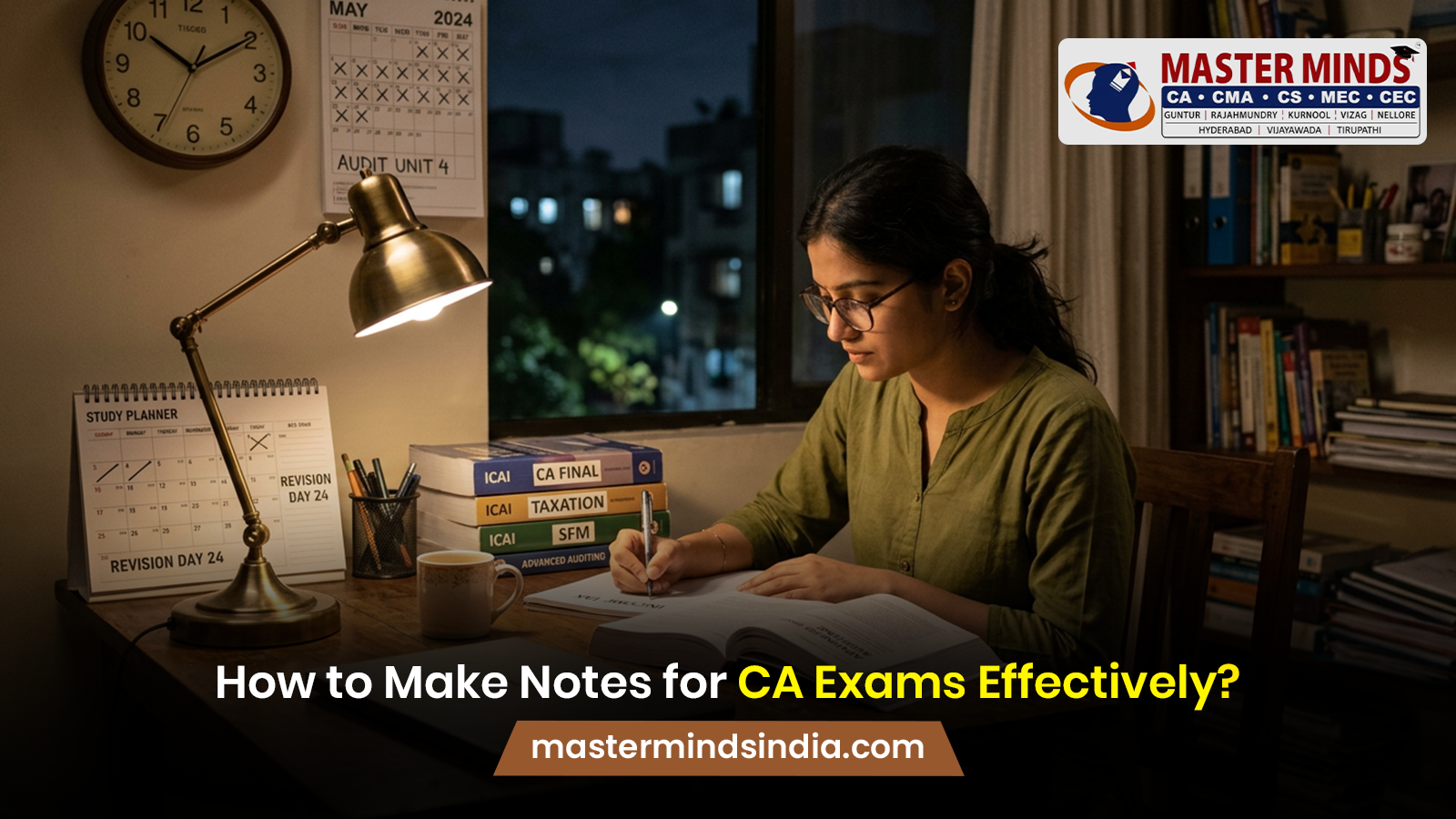
Preparing for Chartered Accountancy is not just about studying hard, it is about studying smart. One of the biggest game changers in your preparation is how you make your notes. If done right, notes can save you hours during revision and help you retain concepts for a long time. Many students struggle not because they don’t study enough, but because their study method lacks structure.
If you want to clear CA Exams Effectively, learning the art of note-making is essential. This guide will walk you through practical, simple, and proven ways to create notes that actually work.
Why Notes Matter in CA Preparation
CA syllabus is vast. It is not something you can revise from textbooks again and again. Notes act like your personal shortcut.
Good notes help you:
- Revise faster before exams
- Remember concepts clearly
- Avoid information overload
- Build confidence during last-day revisions
Think of your notes as a condensed version of everything important. When exams are near, your notes should feel like a reliable companion, not a confusing mess.
Start With Understanding, Not Writing
A common mistake students make is writing notes while reading for the first time. This leads to copying rather than understanding.
Instead:
Read → Understand → Then Write
If you don’t understand a concept, your notes will also be weak. Strong notes come from clarity, not from copying paragraphs.
Keep Your Notes Short and Sharp
Your notes are not textbooks. If they look like one, you are doing it wrong.
Focus on:
- Key points
- Important formulas
- Concepts explained in your own words
- Keywords and headings
Avoid writing long paragraphs. The goal is quick revision, not detailed explanation.
Use Simple Language You Actually Understand
Write as if you are explaining the concept to yourself. Do not try to sound “professional” or “bookish.”
For example:
Instead of writing complex definitions, simplify them in your own words.
This helps your brain recall information faster during exams.
Use Visual Techniques
Your brain remembers visuals better than plain text. This is especially useful when preparing for CA Exams Effectively.
Try:
- Flowcharts for processes
- Tables for comparisons
- Diagrams for concepts
- Highlighting important points
A well-structured page is easier to revise than a crowded one.
Subject-Wise Note Making Strategy
Not all subjects should be handled the same way.
Practical Subjects (Accounts, Costing, FM)
- Focus on formats and steps
- Note down tricky adjustments
- Maintain a separate formula sheet
- Practice-based notes work best
Theory Subjects (Law, Audit, SM)
- Use headings and subheadings
- Highlight keywords
- Write points in bullet format
- Focus on presentation style
This approach makes your preparation more aligned with exam expectations.
Maintain a Separate Revision Notebook
This is one of the smartest strategies many toppers follow.
Create a “Final Revision Notebook” that contains:
- Only the most important concepts
- Key formulas
- Frequently asked questions
- Mistakes you made earlier
This notebook becomes your go-to material before exams. It helps you revise CA Exams Effectively without stress.
You Can Also Read:
- CA Intermediate New Study Material
- CA Course Duration After 10th, 12th & Graduation
- Tips to Crack CA in the First Attempt
- Time-Saving Calculator Tricks for CA Foundation Students
- How to become a CA?
Update Your Notes Regularly
Notes are not something you write once and forget.
As you:
- Solve more questions
- Attend classes
- Revise topics
Keep updating your notes. Add missing points, improve explanations, and remove unnecessary content.
Your notes should evolve as your understanding improves.
Avoid Over-Decorating Notes
Many students spend too much time making notes “look good.”
Colored pens, fancy headings, and designs are fine, but don’t overdo it. Your focus should be clarity, not decoration.
Simple, clean, and readable notes are far more effective.
Digital vs Handwritten Notes
Both methods work. It depends on your comfort.
Handwritten Notes
- Better memory retention
- Easier for quick revision
- More personal
Digital Notes
- Easy to edit
- Organized storage
- Accessible anywhere
If you can, use a mix of both. For example, handwritten for concepts and digital for updates or summaries.
Mistakes to Avoid While Making Notes
Many students unknowingly make these errors:
- Copying entire study material
- Writing without understanding
- Making notes too lengthy
- Ignoring revision
- Not updating notes
Avoiding these mistakes can significantly improve your preparation.
How Notes Help During Exam Time
When exams are near, time becomes your biggest challenge. This is where good notes shine.
Instead of revisiting bulky books, you can:
- Revise entire chapters quickly
- Focus on weak areas
- Boost confidence
This is how notes help you handle CA Exams Effectively without feeling overwhelmed.
CA & CMA Online Classes: